Emergency Preparedness
Why “Getting Prepared” Always Fails (And How to Fix It)

Apr
Most people don’t fail at preparedness because they’re lazy.
They fail because they’re overwhelmed.
There’s too much information.
Too many opinions.
Too many people shouting:
“You need this!”
“No, buy that!”
“Start here!”
“No, start there!”
So people do what most overwhelmed people do:
Nothing.
Or worse…
They buy random stuff and hope for the best.
Random Gear Is Not a Plan
This is one of the biggest problems in preparedness.
People end up with:
- a flashlight they forgot batteries for (or is cheap and won’t work)
- canned food they never eat (so it just sits there collecting dust like in a museum)
- a water filter they’ve never tested (because they just assume they’ll “figure it out”)
- a bug out bag with no actual evacuation plan (and never practicing with it)
It feels productive.
But it’s not a system.
It’s just stuff.
And stuff without a plan creates false confidence.

Preparedness Isn’t About Buying More
It’s about answering better questions.
Questions like:
- What problem am I solving first?
- What happens if the power goes out tonight?
- What happens if water stops flowing?
- Could my family function for 7 days without stores?
- If I had to leave fast, what would I grab?
Those questions create clarity.
And clarity creates action.
Start With Systems, Not Scenarios
A lot of people try to prepare for every disaster at once.
That’s a fast way to burn out.
Instead, focus on systems:
Food
Can you feed your family without relying on the grocery store?
Water
Can you store, source, and purify enough water?
Power
Can you cook, light your home, and charge essentials without the grid?
Information
Can you access important documents and stay informed if the internet is down?
Movement
Can you stay home safely—or leave quickly if needed?
That’s real preparedness.
Because these systems work across almost every emergency.

Preparedness Should Support Your Life, Not Take It Over
This is where people get stuck.
They think prepping means:
- living in fear
- spending thousands
- turning their house into a bunker
No.
It means building your life in a way that makes disruption less disruptive.
It should reduce stress, not create more of it.
What You Should Do Next
Pick one system.
Just one.
Not ten.
Not everything.
One.
Maybe it’s food.
Maybe it’s water.
Maybe it’s organizing your emergency documents.
Build that first.
Then move to the next.
Preparedness works when it becomes a process—not a panic purchase.
Want a Real Starting Point?
If food and water are the areas where you feel the most overwhelmed, start there.
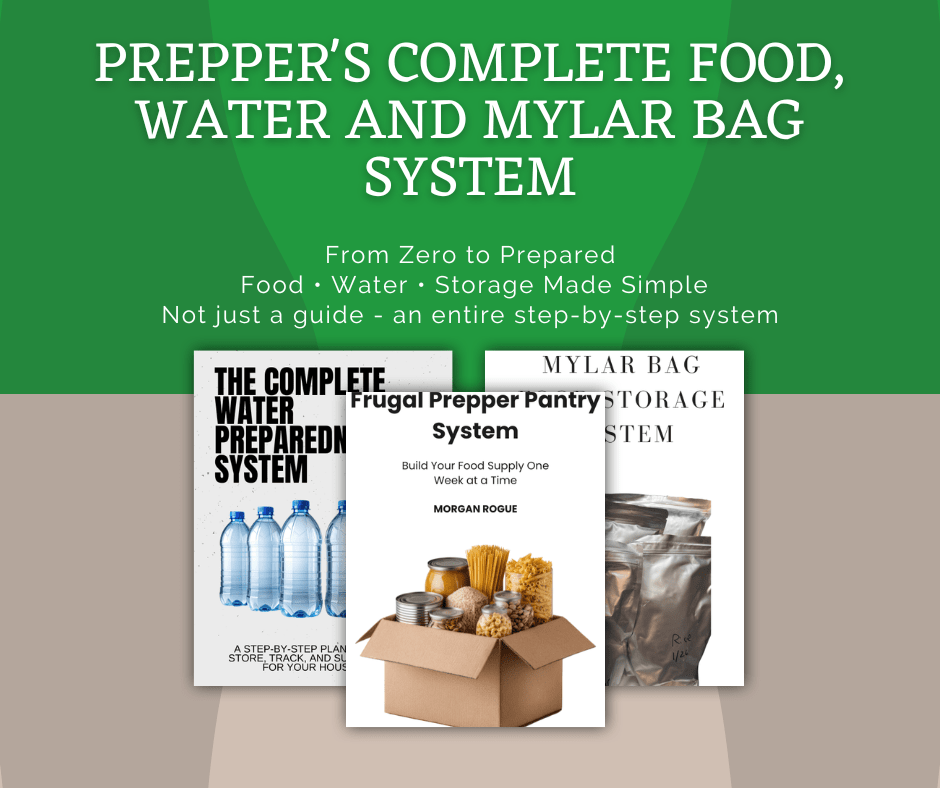
That’s exactly why I created my Food, Water, and Mylar Bag System.
It walks you through:
- what to store
- how much you actually need
- how to protect it long-term
- how to organize it so it works in real life
Not random gear.
A real system.