Emergency Preparedness
You Have 72 Hours… Then What? (Urban Prepper Plan)

Apr

Most people have heard of the “72-hour rule.”
Have enough supplies to last three days, and you’ll be fine… right?
Not exactly.
72 hours is just a starting point. Because the real problem isn’t surviving the first 72 hours.
It’s what happens after that; when things don’t magically go back to normal.
The First 72 Hours Are Just the Beginning
Let’s walk through what actually happens in a real-world emergency.
First 24 Hours
- Power goes out
- Phones still work (for now, but it’s hard to get on the internet with everyone else in the world also trying to access it and overloading the cell towers)
- You’re using what’s already in your house
- There’s confusion, frustration, tapping of fingers waiting for it to come back, but not panic
Most people feel like:
“We’ve got this.”
24–72 Hours
- Stores are picked over or empty
- Gas stations may shut down
- Water pressure can drop or become unsafe
- People start getting frustrated or mad that services haven’t been restored
This is where stress kicks in.
Day 3 Is Where Things Start Falling Apart
Here’s what most “72-hour kits” don’t prepare you for:
- You don’t know what to do next
- Important documents are scattered or missing
- You’re making decisions under pressure
- Everyone in the house is asking you what’s going on
The Real Problem is Lack of Structure
Most people prepare like this:
- Buy some food
- Store some water
- Throw together a bag
But they never answer:
- Where do we go if we have to leave?
- Who do we contact if phones are down?
- What’s the plan for the kids?
- What happens if we’re not all together?
So when something happens…they’re forced to figure it out in real time…but most of the time they just panic.
It flooded real bad here a couple years ago. I watched a video of a woman with her children and bed-ridden father begging and pleading for help as their home was flooded. She kept saying, “I’ve lived here 30 years and I’ve never seen anything like this.”
That’s just it. People never think it’ll happen.
Until it does.
I don’t want you to be unprepared, friend.
By the way, the woman and her family were rescued, thank the Lord.

What Actually Makes the Difference
It’s not more stuff. It’s having everything:
- In one place
- Clearly organized
- Easy to access under stress
- Planned ahead of time
Because when your brain is overwhelmed, you don’t rise to the occasion, you fall back on what you’ve already prepared; your foundation.
Think About Your Household Right Now
If something happened tonight:
- Could you grab everything important in under 5 minutes?
- Would everyone know what to do?
- Do you have a clear plan or just a general idea?
Most people don’t realize how unprepared they are until they actually think through those questions.
What You Should Do Next
Start simple.
- Gather your important documents
- Write down your emergency contacts
- Create a basic plan for your household
Then, place it all in a binder or wherever makes sense.
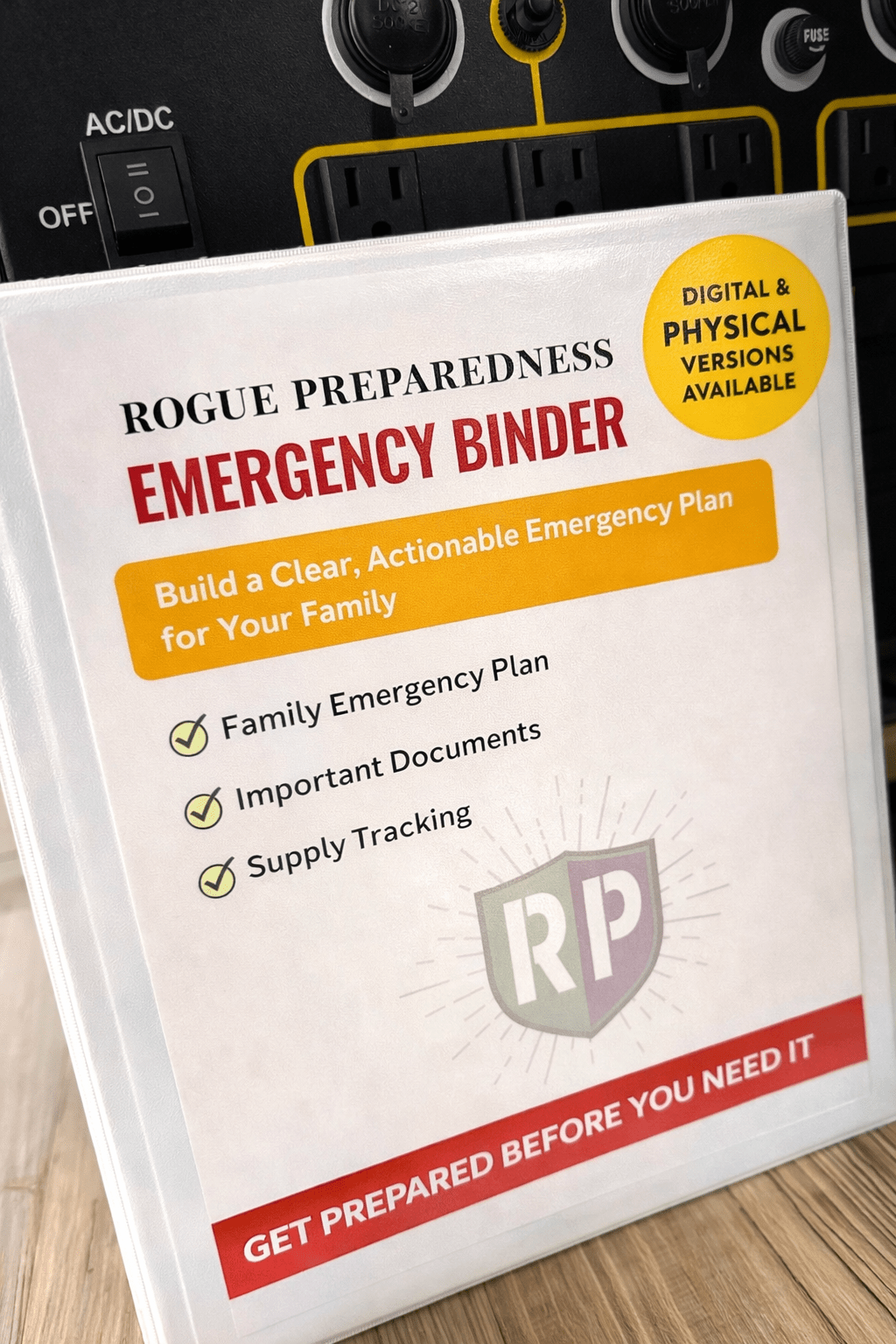
Want a Shortcut?
If you want something that’s already laid out for you—well you’re in luck!
I put together a full Emergency Preparedness Binder that walks you through it step-by-step.
It’s designed so you’re not guessing…You’re just filling in the blanks and getting it done.
Because the goal isn’t to survive…it’s to THRIVE.