
Emergency Preparedness
Prepping in 400 Square Feet: Apartment Preparedness Made Simple

Jul
If I had a dollar for every message that starts with “Okay but what if I live in an apartment…” I could probably retire early. So let’s settle this once and for all, because I want you to hear it straight from me: you do not need a house, a yard (or any property), or a garage to be prepared. You need a shelf, a plan, and about twenty minutes a week.
I have lived in a 200 square foot cabin, a class C RV and in small studio apartments (and in some cases, just a single rented room). I’ve been there, done that, and I’ve always been prepared.
The size of your space doesn’t matter. Just being prepared does.
I know the preparedness world can make it feel like you need a homestead, a bunker, and a pallet of MREs before you’re “allowed” to call yourself ready. That’s not how this works, and it’s definitely not how I teach it. Preparedness isn’t about how much stuff you can pile up; it’s about how well you can handle the next 72 hours, no matter what those 72 hours throws at you. And that math works exactly the same whether you’re in a five-bedroom house or a 400-square-foot studio.
So let’s talk about what it actually looks like to prep small.
You’re Not Behind
Here’s the mindset shift I want you to make before we get into the practical stuff: stop comparing your space to someone else’s.
The person with the walk-in pantry and the deep freezer and the root cellar and the 400 million acres; is prepping for their space. You’re prepping for yours. A studio apartment isn’t a lesser version of preparedness, it’s just a smaller area that needs a real system.
Think of it like packing for a trip. Some people check three bags. Some people fit everything into one carry-on. The carry-on person isn’t less prepared for the trip, they just wanted to be more intentional about what made the cut. That’s you. You’re the carry-on prepper, and it’s a completely legit way to prep.
The prepping concept is the same, you just need to prep for your space. Not mine or anyone else’s.

Start With the Space You Actually Have
Before you buy a single thing, walk your apartment and find your “prep real estate.” You have more than you think:
- One shelf (even a shared one, or maybe it’s only in a closet) – the metal shelves hold a lot
- Under the bed – genuinely one of the best-kept secrets in small-space prepping
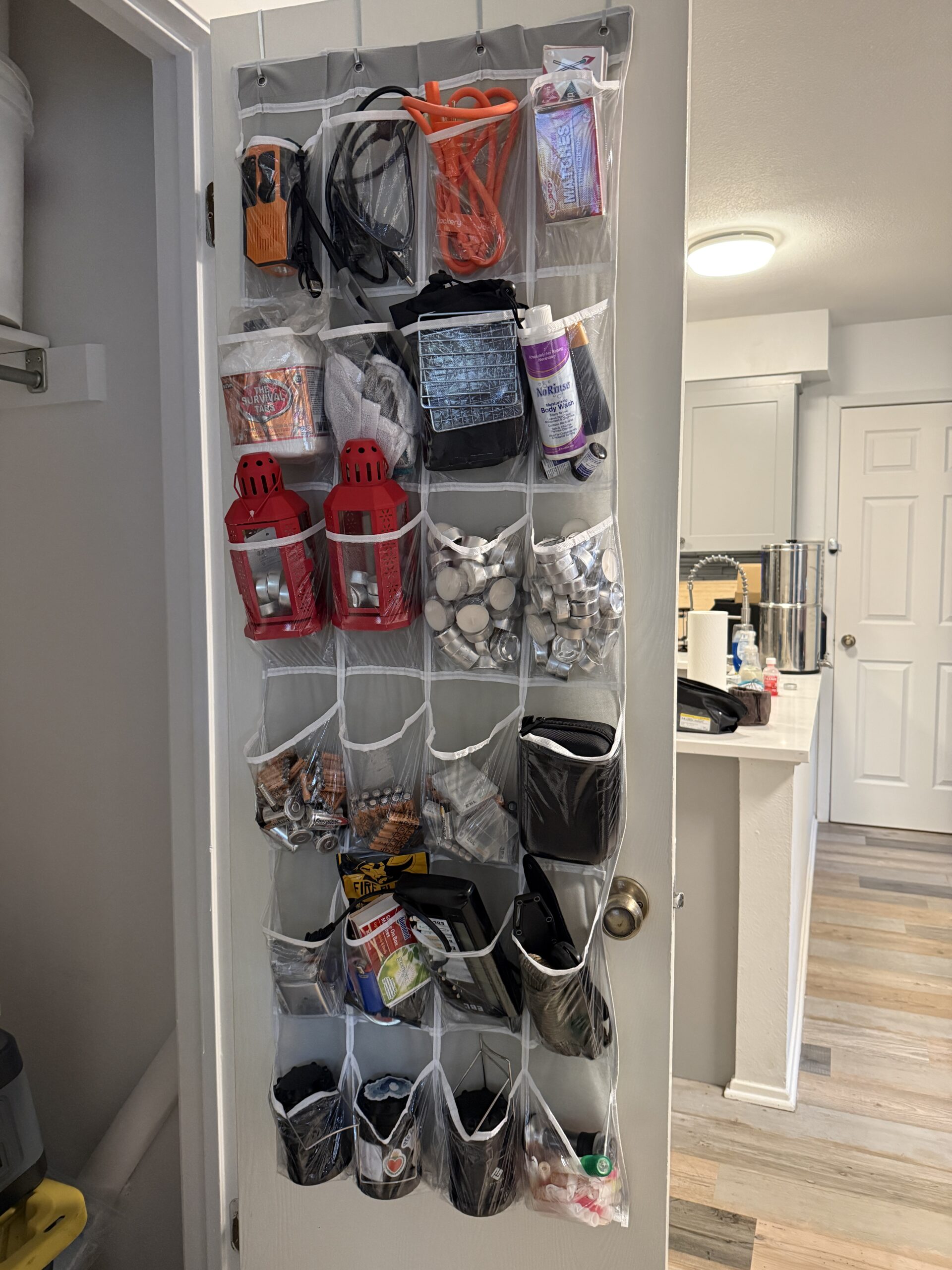
- Closet and shoe organizer on closet door
- Inside ottomans or storage benches that double as furniture
- Stackable totes that you throw a blanket over and make it into a table
You don’t need a room. You need zones.
Water: The Non-Negotiable, Even in 400 Square Feet
Water is always where I tell people to start, apartment or not, because you can get through a surprisingly long time without food but not without water. In a small space, the trick is thinking in terms of stackable, flat, and multi-purpose:
- Store water in flat-stackable containers (think water bricks or even repurposed juice bottles) that slide under the bed or on a closet floor, you could even store water in stackable bins (I do this in several of my closets)
- A simple water filter (the kind that fits in a drawer) covers you if you need to treat water from an unexpected source
- Rotate your water like you rotate your fridge, oldest in front, newest in back
- Freeze water
- Place water on a shelf
You’re building a system that can carry your household through a few rough days.

Food: Pantry Logic, Not Bunker Logic
Apartment prepping for food isn’t about stockpiling pallets, it’s about building a rotating pantry that quietly does double duty as your everyday groceries. A few small-space moves:
- Shelves
- Under-bed bins are perfect for shelf-stable items you don’t need daily access to
- Buy a little extra of what you already eat, and rotate it, this is the “just in case” method, not the “doomsday bunker” method
- Skip the giant bucket of freeze-dried food if you don’t have anywhere to put it. A well-stocked, rotated shelf of real food you’ll actually eat beats gear collecting dust
- Don’t forget about indoor safe alternative cooking options like Sterno or an alcohol stove. Those are both compact, efficient and easy to use options, and not to mention, the fuel for both of those can be stored safely inside of an apartment.
Power & Light: Small Footprint, Real Function
You don’t need a whole-home generator in an apartment and frankly, most apartments won’t let you run one anyway (more on lease restrictions in a second). What you need is layered, portable power:
- A power bank or portable power station that can charge your phones, lights, radios, fridge or what-have-you.
- Battery or hand-crank lanterns
- A small solar panel if you have any access to a sunny window, balcony, or patio (yes, solar panels work GREAT through a window! Just as long as they aren’t tinted).
The goal isn’t to keep your whole apartment running. It’s to keep communication, light, and a few essentials alive until things stabilize.
Communication: Your Plan Doesn’t Need a Yard Either
This is the pillar people forget entirely, and it costs nothing to build:
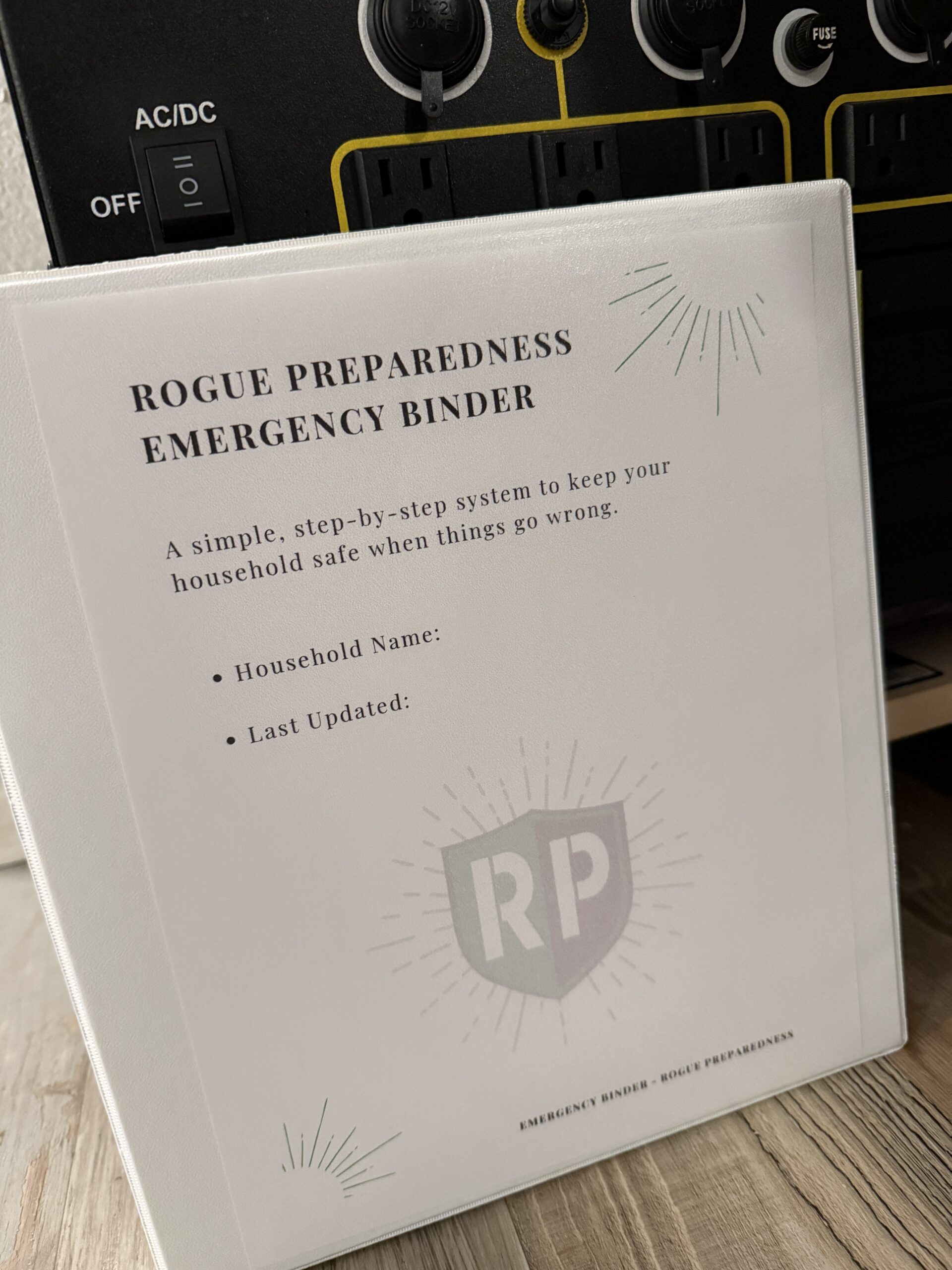
- A family communication plan – where do you meet, who do you call, what’s the out-of-town contact
- A written (paper!) list of emergency contacts, because your phone won’t always have battery
- Know your building’s specific realities: where are the exits, is there a landline in the building manager’s office, what’s the evacuation plan for your specific floor
The Renter-Specific Stuff Nobody Talks About
This is where apartment prepping genuinely differs from house prepping, and it’s worth naming directly:
- Check your lease before you store fuel, propane, or anything flammable as many buildings restrict this for fire safety, and it’s worth knowing the rules rather than guessing (this is why I suggest the sterno and alcohol stove)
- No yard, no problem because even though you can place a bucket out on a balcony to collect rain water, you won’t be able to have a dedicated rain water system or even a dedicated garden. You CAN have bucket and container gardens, though, and you can even have indoor herbs and indoor hydroponics.
- Talk to a neighbor or two. In an apartment building, your “community” prep might just be one trustworthy neighbor you check in with. That’s a real resilience strategy.
- Off-site storage (a storage unit, a family member’s garage) can be a great overflow option if your space genuinely maxes out
Skills Beat Stuff, Every Single Time
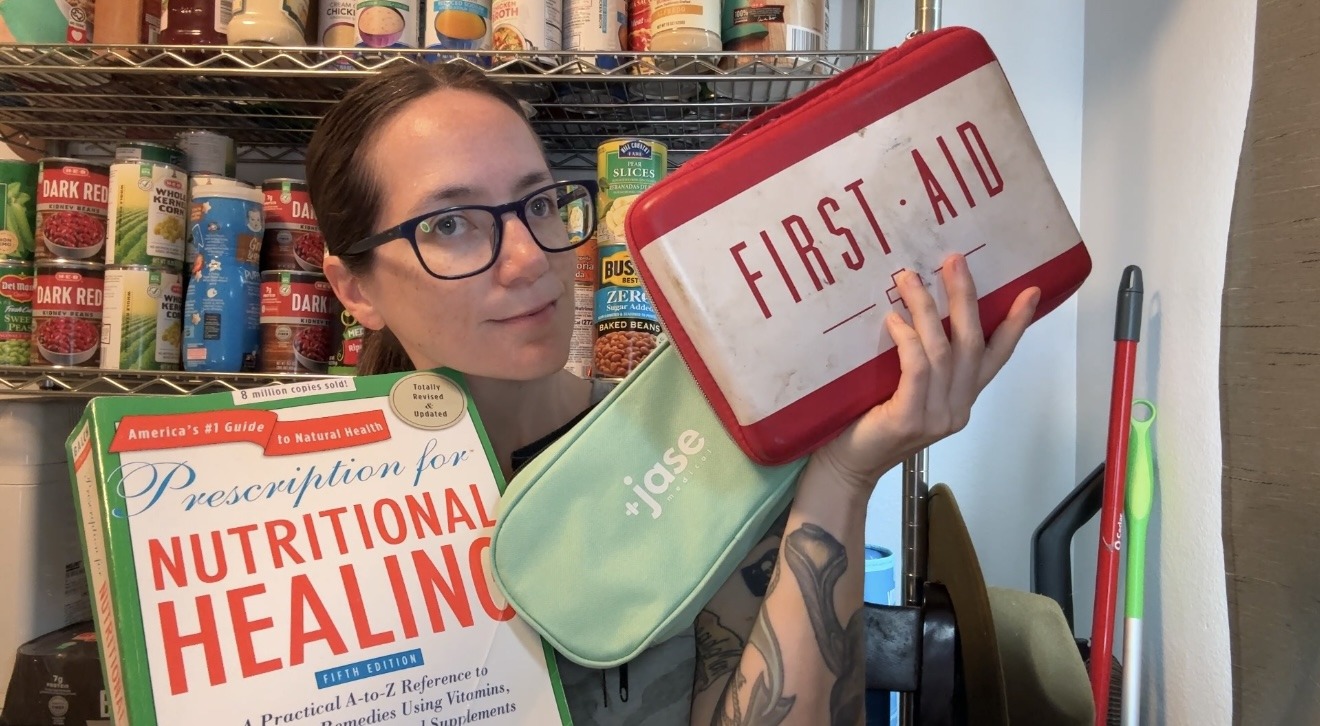
If there’s one thing I want you to walk away with, it’s this: the size of your apartment has zero bearing on how many skills you can build. Learning to purify water, treating a basic injury, knowing how to preserve food, understanding your building’s emergency plan; none of that requires square footage. Skills are the one part of preparedness that scale to exactly zero storage space, and they’re often the thing that matters most when something actually happens.
I was pressure canning in my RV, so you can learn skills anywhere.
You’re Already More Prepared Than You Think
If you’ve read this far, you’ve probably already got a flashlight somewhere, a few extra cans of something, and a general sense of “I should probably have a plan.” That’s a solid foundation. Preparedness in an apartment isn’t about doing less. It’s about doing it on purpose, in the space you’ve got, with the framework to back it up.
Ready to stop wondering “am I doing enough” and start following an actual plan? Join the community here and let’s stay intentional and consistent with your preparedness; no yard required!

Preparing for emergencies in a small apartment requires smart organization and realistic planning. Compact storage solutions can make limited space work much harder. Which preparedness item should apartment residents prioritize first?
Where can I find the copies to fill out for binder?
If you need more copies for your binder, please email me.
Thank you, Morgan. We live just outside of Charleston, SC and are 1/4 mile from a lake. The lake is dammed, so if the dam breaks, we loose our emergency water supply. We are suceptible to hurricanes and that is our first and biggest emergency. We had put together our important papers and sentimental photos and such but they have gotten mixed up with other things. I look forward to your knowledge and direction as we put things together for a hurricane or…
Thank you again.
Blessings,
Stokes
Thank you for sharing and thank you for being here.